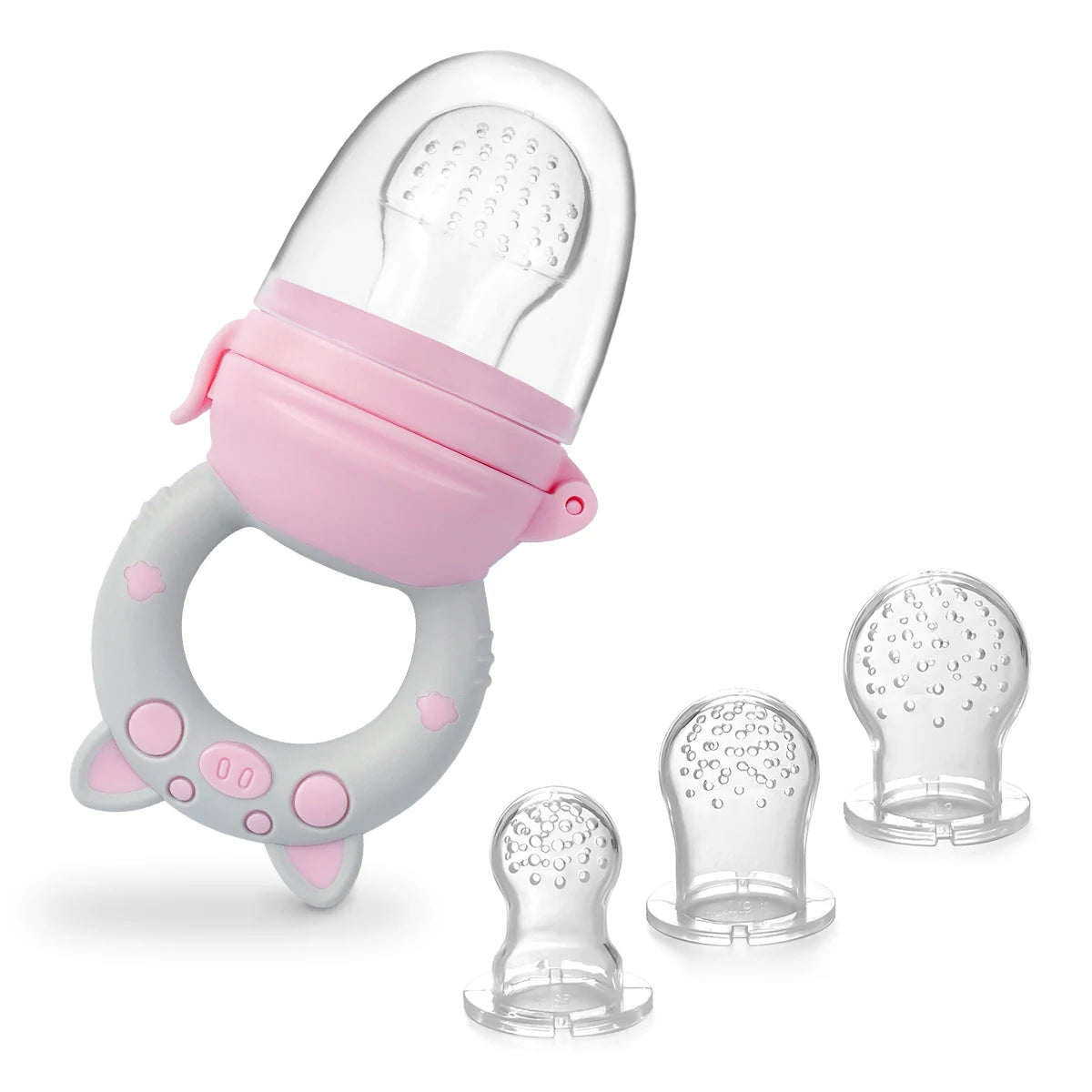
Silicone Baby Fruit Feeder Pacifier: Safe First Fruits & Teething Relief
Share
Silicone baby fruit feeder pacifiers have become one of those “seen it everywhere” baby gadgets—but behind the viral videos there’s a genuinely useful, practical tool for first foods and teething relief when used correctly. This guide walks you through what a baby fruit feeder is, when and how to use it safely, and why a silicone baby fruit feeder pacifier like Snugora Baby’s can fit nicely into your feeding routine.
If you scroll parenting TikTok or Instagram, you’ve probably seen babies happily gnawing on a colorful silicone baby fruit feeder pacifier filled with strawberries or frozen milk. It looks adorable—and also a little confusing the first time you see it. Is this actually safe? Is it just a trend? Does your baby really need one?
In this article, we’ll unpack what a baby fruit feeder is, how it works, when babies can use a fruit feeder, and how to use one safely as you start solids and navigate teething. Along the way, we’ll show where a well‑designed silicone baby feeder like Snugora Baby’s can make life easier for busy parents who want a safe way to introduce real flavors without constant anxiety.
What Is a Silicone Baby Fruit Feeder Pacifier?
A silicone baby fruit feeder pacifier (also called a baby fruit feeder, fruit feeder pacifier, baby fruit pacifier, or baby food feeder) is a small feeding tool that looks a bit like a pacifier and a snack cup combined.
Most designs have:
-
A handle or ring that’s easy for little hands to grip
-
A soft silicone pouch or nipple with tiny holes
-
A lid or twist‑lock top that keeps food secure inside
You open the feeder, place small pieces of soft fruit, veggies, or smooth purees inside the silicone pouch, close it, and hand it to your baby. As they chew and suck, tiny bits of food and juice pass through the holes—just enough to taste and explore, but not big chunks.
How it differs from a regular pacifier or mesh feeder
Versus a regular pacifier
A regular pacifier only soothes; a fruit feeder pacifier actually delivers food and flavor through the silicone pouch, so it works more like a tiny baby food feeder.
Versus mesh feeders
Mesh‑style feeders use a fabric net that can trap food particles and be harder to clean thoroughly. A silicone baby feeder is made from smooth, food‑grade silicone, is usually easier to rinse and scrub, and many models are top‑rack dishwasher safe.
The core idea is simple: a silicone baby fruit feeder pacifier gives your baby a safe way to explore new tastes and textures while reducing the risk of large pieces that could be a choking hazard when they’re not ready for full finger foods yet.
At Snugora Baby, our silicone baby fruit feeder pacifier follows the same principles: soft, food‑grade silicone, small holes that only let through tiny, mashable bits, and an easy‑hold handle designed for little hands.
Why Parents Love Baby Fruit Feeders Right Now
Safe way to introduce first fruits
For many parents, the biggest appeal of a baby fruit feeder is that it feels like a safer middle ground between spoon‑feeding purees and full baby‑led weaning.
A fruit feeder pacifier:
-
Lets your baby taste real fresh fruits and soft foods
-
Controls how much and how big the pieces are (only small, soft bits come through)
-
Reduces the risk of your baby biting off a large chunk compared to handing them a piece directly
If you’re curious about BLW (baby‑led weaning) but nervous about choking, a baby fruit feeder can be a gentle first step. Your baby can practice chewing and exploring flavors with an extra layer of protection from the silicone pouch.
Our silicone baby fruit feeder pacifier is designed with small, evenly spaced holes, so your baby gets flavor and soft mash, not big chunks all at once.
Helps with teething discomfort
Teething is rough—for babies and for the parents trying to soothe them. A silicone baby feeder doubles as a simple teething helper when you fill it with cold or frozen foods.
Many parents use a baby fruit feeder for teething relief by:
-
Filling it with chilled or frozen fruit (like banana, mango, or steamed apple)
-
Adding frozen breast milk or formula cubes
-
Offering cold smooth purees
As your baby chews on the silicone, the cool food inside helps soothe sore gums, and the chewing motion itself can provide comfort. It’s not a medicine and doesn’t “treat” teething, but it can be a natural, comforting way to offer teething relief with a fruit feeder—especially on hot days or during fussy evenings.
Because Snugora Baby’s fruit feeder is made from soft silicone, it’s gentle on gums while still sturdy enough for determined chewers.
Encourages self‑feeding and sensory play
Babies love to do things “by myself” long before they can say it. A baby food feeder supports that independence in a controlled way: your baby holds the handle, brings the feeder to their own mouth, and practices grip strength, hand‑to‑mouth coordination, and chewing motions.
They explore new tastes, smells, and textures at their own pace, which supports sensory development and makes trying new foods feel fun rather than stressful.
For parents, it means you can sit nearby and supervise instead of constantly scooping and wiping with a spoon. Mealtime or snack time can be a calmer, more exploratory experience, and many parents find that their baby will happily sit in a high chair gnawing on a baby fruit pacifier while they prep dinner or drink a still‑warm coffee.
The Snugora Baby silicone baby fruit feeder pacifier is built with a sturdy, easy‑grab handle that small hands can hold from different angles, making it a practical self‑feeding tool, not just a “cute gadget.”
When Can Babies Start Using a Fruit Feeder?
Most experts suggest that babies are ready to explore solids—including food through a fruit feeder pacifier—around 6 months, when they show clear signs of readiness. Some families start a bit earlier or later based on pediatrician guidance and baby’s development.
Always follow your own pediatrician’s recommendations first.
Signs your baby may be ready for a baby fruit feeder
Look for:
-
Can sit with support (high chair or your lap) and hold their head steady
-
Shows interest in food (watches you eat, opens mouth when you bring food close)
-
Has lost most of the tongue‑thrust reflex (doesn’t automatically push everything out with the tongue)
-
Can grasp objects and bring them to their mouth
A baby fruit feeder is meant to complement other forms of feeding, not replace breast milk, formula, or age‑appropriate purees as the main source of nutrition.
What to put in a fruit feeder by age (rough guide)
Every baby is different, but here’s a simple high‑level guide you can adapt with your pediatrician:
-
4–6 months (only if solids are cleared early): very smooth purees (banana, pear, steamed apple) or a little breast milk or formula frozen into small cubes.
-
Around 6–8 months: soft ripe fruits like banana, avocado, very ripe pear, mango, steamed apple or peach, and smooth veggie purees.
-
8–10 months: slightly more textured fruits (mashed berries without seeds, soft melon) and soft cooked veggies like sweet potato or carrot.
-
10–12+ months: mixed fruit blends, yogurt mixes (if tolerated), and a wider variety of soft fruits and veggies, still cut and prepared safely.
Use this as a starting point, not a strict schedule, and always introduce new foods one at a time to watch for reactions.
How to Use a Silicone Baby Fruit Feeder Pacifier Safely
Step‑by‑step instructions
Here’s how to use a silicone baby fruit feeder pacifier in a calm, practical way:
-
Wash your hands and the feeder. Clean the silicone baby fruit feeder pacifier thoroughly before first use and after each use, following the manufacturer’s instructions.
-
Prepare the food. Choose a soft, age‑appropriate fruit or veggie (or a smooth puree). Remove skins, seeds, pits, and hard bits, and cut into small, soft pieces if you’re not using puree.
-
Fill the silicone pouch. Open the feeder, place a few small pieces or a spoonful of puree inside—don’t overfill, so it’s easy for food to move around.
-
Close securely. Make sure the top is properly locked or snapped so your baby can’t open it themselves.
-
Seat your baby safely. Sit your baby upright in a high chair or on your lap. Avoid using the feeder while your baby is lying down or strapped into a car seat.
-
Offer the feeder and stay close. Hand your baby the handle, guide it to their mouth if needed, and stay right there to supervise while they explore.
-
Stop when baby is done or fussy. When your baby loses interest, gets frustrated, or starts throwing it, take a break and clean the feeder.
As with any feeding tool, never leave your baby alone with a baby fruit feeder; it helps reduce risk but does not replace active adult supervision.
Best foods to put in a baby fruit feeder
Great starter options for a silicone baby fruit feeder pacifier include:
-
Ripe banana
-
Very soft pear or peach (peeled)
-
Avocado
-
Soft berries without seeds or skin (like very ripe strawberries, mashed)
-
Steamed and cooled apple, peach, or pear
-
Chilled smooth purees (fruit or veggie)
-
Breast milk or formula frozen into small “pops”
-
Plain full‑fat yogurt (if already tolerated and approved by your pediatrician)
Foods to avoid in a baby fruit feeder:
-
Hard raw veggies or fruits that don’t mash easily
-
Whole grapes, cherry tomatoes, or large round pieces
-
Nuts and nut chunks (nut butters may be possible depending on allergy guidance)
-
Honey before age 1
-
Foods with high allergy risk without talking to your pediatrician first
If you’re introducing common allergens (like peanut or egg), follow your pediatrician’s guidance on when and how, and don’t rely on the feeder alone to make it “safe.”
Cleaning and care tips
One of the big advantages of a silicone baby fruit feeder pacifier over mesh designs is cleaning.
Best practices:
-
Rinse right away. After your baby is done, empty any remaining food and rinse under warm water so bits don’t dry onto the silicone.
-
Fully disassemble. Take apart all removable pieces (pouch, ring, lid) so you can clean every surface.
-
Use warm soapy water or dishwasher. Most silicone feeders are top‑rack dishwasher safe, but always check your specific product’s instructions.
-
Occasionally sterilize. Especially for younger babies, you may want to sterilize the silicone pouch periodically according to the manufacturer’s guidance.
The Snugora Baby fruit feeder is designed with hygiene in mind: it disassembles easily, uses food‑grade silicone, and is free from common problem chemicals, so you’re not fighting with sticky mesh or hidden crevices.
Fruit Feeder Pacifier vs Other First‑Food Tools
A fruit feeder pacifier is just one option in your first‑foods toolkit; here’s how it compares to other popular tools.
Spoon + purees
Spoon feeding gives you high control over portion and texture and makes it easy to measure intake, but it keeps feeding mostly adult‑led and offers less chewing practice.
Mesh baby fruit feeder
Mesh feeders work similarly to silicone fruit feeders but can trap food, stain, and be harder to clean thoroughly, which may lead to more bacteria if not washed right away.
Silicone baby fruit feeder pacifier
A silicone baby fruit feeder pacifier is easy to clean, controls piece size, encourages self‑feeding, and doubles as a gentle teething tool, while still requiring close supervision.
Standard teether (no food)
Regular teethers are simple and low‑mess and are great for chewing, but they don’t offer flavor or nutrients and may not hold attention as long as a fruit‑filled baby food feeder.
Most families end up with a small set of tools: spoons, a baby fruit feeder, and one or two favorite teethers. A silicone fruit feeder is especially handy as a first step toward baby‑led weaning and as a travel‑friendly gadget you can toss in the diaper bag for stroller rides or restaurant waits.
How Our Silicone Baby Fruit Feeder Pacifier Stands Out
There are a lot of baby fruit feeders out there, especially on big marketplaces. Snugora Baby’s silicone baby fruit feeder pacifier is designed specifically for real‑life parents, not just for a viral video.
Safe, food‑grade materials
Made from high‑quality, BPA‑free silicone that’s gentle on gums and tough enough for everyday chewing.
Thoughtful design for busy parents
The easy‑grab handle is sized for small hands, the locking mechanism is secure yet quick for adults to open, and the feeder breaks down into just a few parts for fast, thorough cleaning.
Sized for early eaters
The pouch is sized so babies can hold it comfortably and reach the food inside without struggling, making it a realistic baby‑led weaning tool rather than a novelty.
Great for diaper bags and on‑the‑go
Lightweight and compact, it’s easy to toss into the diaper bag for a grocery run, stroller walk, or dinner out—just add some fruit or a frozen milk cube, and you’ve got a snack plus teething relief in one.
Loved by real parents, not just “TikTok famous”
Parents use it for first tastes of banana at home, frozen watermelon on a hot day, chilled pear during a teething flare, and to keep baby busy in the high chair while they finish making dinner.
If your baby is ready to explore real flavors and you’d feel better with a little extra control over texture and size, our Silicone Baby Fruit Feeder Pacifier is designed to fit right into everyday family life. It’s especially helpful for curious babies who want to chew everything during teething, parents who are nervous about big chunks, and BLW‑leaning families who still want a safety net.